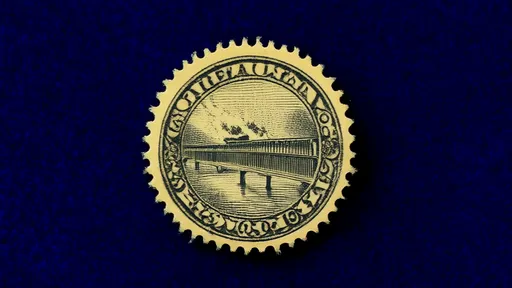
Stamp perforations, those tiny holes lining the edges of postage stamps, are far more than just a practical solution for easy separation. They represent a fascinating intersection of engineering, art, and history that has quietly shaped global communication for nearly two centuries. The story of these serrated edges begins in 1847, when Irish landowner Henry Archer patented the first perforation machine, forever changing how people would interact with these miniature works of art.
Before perforations existed, postal workers had to painstakingly cut stamps apart with scissors, often resulting in uneven edges and damaged designs. The introduction of evenly spaced holes revolutionized stamp production and usage, creating what collectors now refer to as "perf" in their meticulous cataloging systems. What began as a simple utility feature gradually evolved into an aesthetic element and even a security measure against counterfeiting.
The Science Behind the Holes
Perforation technology involves remarkable precision that most stamp users never consider. The measurement system for perforations counts how many holes appear within a 2-centimeter span, creating what collectors call the "perforation gauge." A stamp with perf 10 means there are 10 holes per 2 cm, while perf 12 indicates a finer, more closely spaced pattern. This seemingly minor variation can make dramatic differences in a stamp's appearance and value.
Early perforation machines used rows of small pins to punch through sheets of stamps. The process required exact pressure - too little force would leave incomplete perforations, while too much could tear the delicate paper. Modern rotary perforators can process stamps at incredible speeds, yet still maintain the precision that makes each perforation consistent. Some specialty stamps even feature shaped perforations that form patterns or images when multiple stamps are joined together.
Perforations as Historical Artifacts
Philatelists can often date and authenticate stamps simply by examining their perforations. Changes in perforation gauges frequently coincided with new stamp issues or printing methods, creating distinct chronological markers. During wartime or economic crises, countries sometimes altered their perforation patterns due to equipment shortages or the need for rapid production, leaving behind telltale signs of historical stress.
The British Guiana One-Cent Magenta, the world's most famous rare stamp, owes part of its authentication to its unique perforation pattern. Similarly, collectors prize certain U.S. stamps from the 1860s with "compound perforations" - different spacing on horizontal and vertical edges - because they signify specific printing periods. These tiny holes serve as miniature time capsules, preserving manufacturing details that might otherwise be lost to history.
The Aesthetics of Separation
Beyond functionality, perforations contribute to a stamp's visual appeal. The rhythmic pattern of holes creates a distinctive border that frames the central design. Some modern stamp issues play with this expectation, using irregular perforations or even removing them entirely for artistic effect. So-called "imperforate" stamps, whether created intentionally or as printing errors, have become particularly sought-after by collectors.
In 2004, Canada Post issued a groundbreaking stamp with braille perforations that spelled out "Canada" along the edges, making stamps accessible to blind users. Other countries have experimented with decorative perforations resembling national symbols or cultural motifs. These innovations demonstrate how a purely practical feature can evolve into a canvas for creative expression.
The Digital Age and Perforation's Future
As physical mail declines in the internet era, some question whether stamp perforations will become obsolete. Yet postal services continue innovating with this technology. Self-adhesive stamps now often feature simulated perforations printed along their edges, maintaining the traditional look while adapting to modern production methods. Some countries issue stamps with "die-cut" edges that separate cleanly without traditional holes, yet still reference the classic perforated appearance.
The story of stamp perforations mirrors broader technological evolution - what begins as necessity becomes tradition, then transforms into art. These tiny holes represent more than a way to separate stamps; they connect us to centuries of communication history and human ingenuity. The next time you peel a stamp from its sheet, take a moment to appreciate those precise perforations - they're the culmination of nearly 200 years of innovation in your fingertips.

By /Jul 30, 2025
By /Jul 30, 2025

By /Jul 30, 2025
By /Jul 30, 2025

By /Jul 30, 2025
By /Jul 30, 2025

By /Jul 30, 2025

By /Jul 30, 2025

By /Jul 30, 2025
By /Jul 30, 2025

By /Jul 30, 2025

By /Jul 30, 2025

By /Jul 30, 2025

By /Jul 30, 2025

By /Jul 30, 2025

By /Jul 30, 2025
By /Jul 30, 2025
By /Jul 30, 2025

By /Jul 30, 2025
By /Jul 30, 2025
