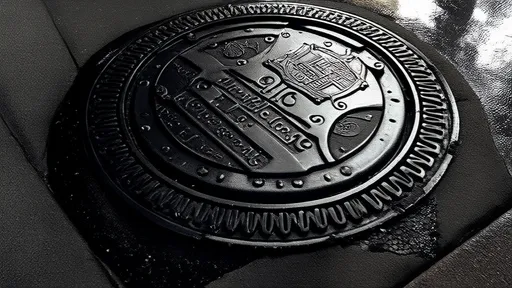
Beneath our feet lies an unspoken language, etched in iron and often overlooked. The humble manhole cover, a ubiquitous feature of urban landscapes, carries more than just the weight of passing traffic—it bears the hidden heraldry of municipal history, material science, and civic identity. These cast-iron discs, particularly those forged from ductile iron, serve as inadvertent archives of a city’s industrial DNA.
Walk any metropolis, and you’ll notice the subtle variations in design—geometric patterns, municipal logos, or cryptic numbering systems. These aren’t mere decorations; they’re functional hieroglyphs. The ribbed surfaces prevent slippage, the curved edges deflect rainwater, and the alloy composition withstands decades of abuse. But beyond utility, there’s poetry in their permanence. A manhole cover installed during the Eisenhower administration might still rotate smoothly in its seating today, its spheroidal graphite iron structure resisting corrosion with quiet dignity.
The Alchemy of Ductile Iron
What makes these discs so enduring? The answer lies in metallurgical innovation. Traditional cast iron, while strong, tends to be brittle. Enter ductile iron—a mid-20th century breakthrough where trace amounts of magnesium transform the carbon within into nodular graphite spheres. This molecular rearrangement gives the material extraordinary tensile strength, allowing it to flex slightly under pressure rather than shatter. Cities adopted this advanced alloy precisely because it could endure freeze-thaw cycles, chemical exposure, and the constant gnawing friction of tires.
Foundries imprint these covers while the metal still glows orange. The embossing isn’t just branding—it’s a forensic marker. During the 1970s, a series of thefts plagued American cities as thieves sold manhole covers for scrap. Municipalities responded by stamping covers with identifying marks and legislating harsh penalties for possession of unmarked cast iron. Today, a trained eye can date a cover’s installation within five years just by analyzing font styles in the casting.
The Hidden Cartography
In Tokyo, certain districts feature manhole covers with elaborate cherry blossom designs—a municipal art project begun in the 1980s. Parisian covers still bear the initials "VP" (Eau de Ville de Paris), a holdover from Haussmann’s 19th-century water system. New York’s Con Edison hexagonal bolt patterns tell utility workers which cables lie beneath without needing to consult maps. This unspoken communication network operates 24/7, requiring no power source beyond sunlight and human attention.
Some cities have turned these functional objects into cultural ambassadors. Seoul’s "Design Manhole" initiative transformed 10,000 covers with traditional Korean patterns. Lisbon’s wave-motif covers reference Portugal’s maritime history. These aren’t mere vanity projects—studies show decorative covers reduce vandalism by fostering community ownership. When people recognize artistry beneath their feet, they’re less likely to deface it.
The Weight of History
Occasionally, these iron time capsules reveal darker chapters. In Berlin, pre-1945 covers sometimes surface during roadworks, their Nazi-era insignias hastily defaced by postwar occupation forces. Shanghai’s French Concession area still has covers bearing the fleur-de-lis, while Mumbai’s colonial-era covers feature the British crown. These unintended memorials spark complex conversations about preservation versus erasure of problematic histories.
Modern manufacturing has introduced new challenges. Cheaper imported covers sometimes lack the material integrity of locally cast versions. In 2018, a Chicago audit found counterfeit covers failing at triple the rate of certified ductile iron. This has led to renaissance for specialty foundries like Britain’s Saint-Gobain PAM, which still uses sand-casting techniques unchanged since the 1920s—because sometimes, the old ways work best.
Next time you pass a manhole cover, pause and look down. That iron disc contains multitudes: materials science, urban planning, art history, and civic identity, all fused into a single, weighty object. It’s a testament to human ingenuity that we’ve standardized something so perfectly functional that most people never give it a second thought—until it’s missing. Then, suddenly, that circular void becomes a portal to the complex infrastructure we depend upon but seldom see.

By /Jul 30, 2025
By /Jul 30, 2025

By /Jul 30, 2025
By /Jul 30, 2025

By /Jul 30, 2025

By /Jul 30, 2025

By /Jul 30, 2025

By /Jul 30, 2025

By /Jul 30, 2025

By /Jul 30, 2025

By /Jul 30, 2025

By /Jul 30, 2025

By /Jul 30, 2025

By /Jul 30, 2025

By /Jul 30, 2025

By /Jul 30, 2025
By /Jul 30, 2025

By /Jul 30, 2025

By /Jul 30, 2025
By /Jul 30, 2025
